Business travel involves much more than booking a flight and a hotel.
For a South African business, a single trip may involve an employee, manager, finance team, travel coordinator, procurement, travel suppliers and an expense process. When these activities are handled through emails, spreadsheets, separate booking platforms and manual approvals, even a simple business trip can become difficult to manage.
This is where corporate travel software can make a practical difference.
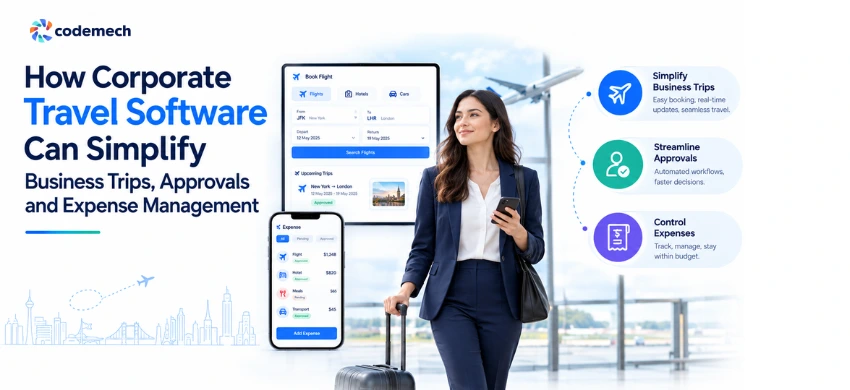
Instead of treating travel booking, approvals and expenses as separate activities, corporate travel software can connect them into one structured process. Employees can request and book trips, managers can approve them, finance teams can monitor spending, and businesses can maintain better visibility over travel activity.
The goal is not simply to automate travel. It is to make business travel easier for employees while giving the organisation appropriate control over costs, policies and information.
What Is Corporate Travel Software?
Corporate travel software is a digital platform designed to help businesses manage employee travel and related activities from one place.
Depending on the organisation's requirements, it can support:
- Employee travel requests
- Flight and hotel search
- Travel booking
- Approval workflows
- Travel policy checks
- Traveller profiles
- Expense management
- Invoices and receipts
- Travel reporting
- Supplier and booking management
- Notifications and approvals
- Integration with HR and finance systems
A small company may only need travel requests, approvals and booking. A larger organisation may need a connected platform covering the entire business travel lifecycle.
The important point is that the software should reflect how the company actually manages travel.
Why Business Travel Becomes Difficult to Manage
The booking itself is often not the biggest problem.
The complexity usually appears around the booking.
An employee might first ask a manager for approval, search for travel options, send the selected option to finance, make the booking, save the invoice and later submit expenses through another system.
If every department uses a different process, information becomes fragmented.
For example:
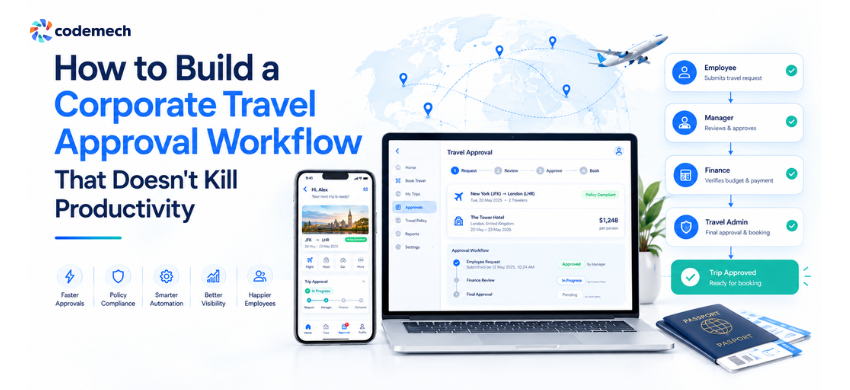
Employee: Requests travel ↓ Manager: Approves trip ↓ Travel Team: Makes booking ↓ Finance: Processes payment ↓ Employee: Submits expenses ↓ Finance: Reconciles expenses
A connected platform can bring many of these steps into one workflow.
This is one of the main reasons organisations consider business travel management software rather than relying on multiple disconnected tools.
How Corporate Travel Software Simplifies the Travel Process
A well-designed platform can create a more consistent process from the first travel request through to expense reporting.
1. Employees Can Start With a Travel Request
Instead of sending an email with incomplete information, an employee can submit a structured request.
The request might include:
- Destination
- Travel dates
- Business purpose
- Project or client
- Preferred travel times
- Estimated budget
- Traveller information
The organisation can then determine whether the trip requires approval before booking.
This gives managers enough information to make a decision without asking employees for the same details repeatedly.
2. Approvals Can Follow Business Rules
Not every trip needs the same level of approval.
A domestic trip within an approved budget might require only a manager's approval.
A high-value trip, international journey or trip outside company policy may require additional approval from finance or another authorised person.
This is where a Corporate Travel Approval Workflow becomes useful.
Instead of creating one complicated process for every employee, the system can route requests according to factors such as:
- Travel cost
- Destination
- Department
- Employee role
- International or domestic travel
- Policy exceptions
- Project or cost centre
This approach can reduce unnecessary approval steps while maintaining the controls the organisation needs.
Travel Booking Becomes Part of the Same Process
Once a trip has been approved, the employee should not have to restart the process on another platform.
A corporate travel platform can connect approval with booking.
For example:
Travel Request → Approval → Travel Search → Booking → Confirmation
Depending on the system, the booking environment may connect with airline, hotel, car rental or other travel inventory providers through APIs.
For businesses developing a more advanced platform, the booking component may involve Travel Booking Engine Development Guide considerations such as supplier integration, availability, pricing, booking confirmation, cancellations and payment handling.
The exact architecture depends on the business model and the travel content the organisation needs.
Travel Policy Can Be Checked Before Money Is Spent
One of the practical advantages of travel software is that policy checks can happen during the travel process instead of after the booking.
For example, a company may define rules around:
- Maximum hotel rates
- Approved travel classes
- Domestic and international travel
- Advance booking requirements
- Preferred suppliers
- Department budgets
- Project spending limits
The system can identify whether a proposed booking is within policy.
If it is outside the policy, the platform can request additional approval rather than simply blocking the employee.
This creates a more useful balance between employee flexibility and financial control.
Expense Management Should Not Be an Afterthought
Travel does not end when the employee returns home.
The organisation still needs to understand what was spent.
Employees may need to submit:
- Hotel expenses
- Meals
- Local transportation
- Parking
- Airport transfers
- Business-related purchases
- Other approved travel expenses
When expenses are completely separate from booking information, employees may have to enter the same trip details again.
A connected corporate travel platform can associate expenses with the relevant traveller, trip, project or cost centre.
This can make reconciliation easier for finance teams and provide better visibility into actual travel costs.
Reduce the Administrative Work for Finance Teams
Finance teams often need to answer questions such as:
- How much did this trip cost?
- Was the travel approved?
- Was the booking within policy?
- Which department should pay for it?
- Which project should receive the expense?
- Has the employee already submitted this expense?
- What are the company's travel costs over a specific period?
When travel information is spread across emails, spreadsheets and booking systems, answering these questions can take time.
A central system can provide structured information that supports reporting and reconciliation.
The objective is not simply to create more reports. It is to make important information easier to access when decisions need to be made.
Connecting the Corporate Travel Technology Stack
Corporate travel software rarely operates completely on its own.
A business may already have systems for HR, accounting, expense management, identity management and procurement.
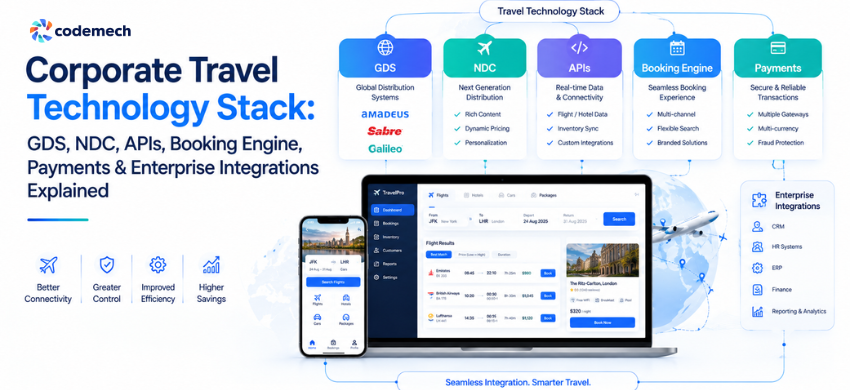
A modern Corporate Travel Technology Stack may therefore include:
- Travel booking systems
- Airline and hotel APIs
- Payment services
- HR systems
- ERP or accounting software
- Expense platforms
- Notification services
- Identity and access management
- Reporting and analytics
For example, employee information could come from an HR system while finance information is connected to an ERP platform.
The objective is to avoid unnecessary duplicate data entry.
Good integration can allow information to move between systems while keeping responsibilities clear for each platform.
Designing Corporate Travel Software for South African Businesses
South African businesses can have very different travel requirements depending on their industry and workforce.
A company may manage frequent domestic travel between Johannesburg, Cape Town and Durban, while another organisation may have employees travelling across Southern Africa or internationally.
The platform therefore needs flexibility rather than a one-size-fits-all workflow.
Currency, supplier availability, travel policies, employee roles and approval structures can all vary between organisations.
There is also an important data consideration.
Corporate travel platforms may process employee names, contact information, identification details, payment-related information and employment data. Organisations should therefore consider appropriate privacy, access control, security and data-handling requirements when designing the platform.
For companies operating under South African requirements, privacy and responsible handling of personal information should be considered during architecture and implementation rather than treated as a final-stage feature.
Why Angular and Java Can Work Well for Corporate Travel Platforms
The technology behind the platform should support the business requirements rather than determine them.
For example, Angular can be used to develop responsive interfaces for:
- Employees
- Managers
- Travel administrators
- Finance teams
- System administrators
A corporate travel platform may have many dashboards and workflows, so a structured frontend architecture can help create consistent user experiences across these areas.
Java can support the backend side of the application, including:
- Business rules
- Approval workflows
- APIs
- Authentication
- Booking services
- Travel integrations
- Expense processing
- Reporting services
For enterprise travel applications, the combination can support a clear separation between the user interface and backend services.
The right technology stack will still depend on the platform's requirements, existing systems, integrations and expected scale.
When Businesses Need Travel Software Development Services
Off-the-shelf travel tools can be suitable when an organisation's requirements closely match the available features.
Custom development becomes more relevant when the business has requirements such as:
- Complex approval rules
- Multiple departments or business entities
- Custom travel policies
- Existing HR or finance integrations
- Special supplier requirements
- Custom reporting
- Multiple travel booking sources
- Existing internal applications
In these situations, Travel Software Development Services can help create a platform around the organisation's actual processes instead of forcing the business to change everything to match a generic system.
Travel Portal Development Services vs a Complete Corporate Travel Platform
A travel portal can provide the booking experience, but corporate travel management often requires more than booking.
A complete platform may need to connect:
Employee → Approval → Booking → Payment → Expense → Reporting
This distinction matters when planning a project.
Travel Portal Development Services may focus primarily on travel search, booking and related customer or employee experiences.
A broader corporate travel platform may require additional workflow, finance, HR, policy and reporting capabilities.
The right scope depends on what the business is trying to solve.
When Travel App Development Services Make Sense
Employees and managers increasingly expect important business workflows to work well on mobile devices.
A mobile travel experience can allow users to:
- Submit travel requests
- Approve trips
- View booking details
- Receive notifications
- Access itineraries
- Review travel information
- Submit selected expenses
However, not every business needs a separate mobile application.
For some organisations, a responsive web application may be enough.
The decision should be based on employee behaviour, travel frequency, required mobile features and the overall platform architecture.
What Should Businesses Look for in a Travel Software Development Company?
Choosing a development partner should involve more than checking which technologies they use.
Businesses should look at whether the provider understands:
- Travel booking workflows
- API and supplier integrations
- Approval processes
- Expense management
- Enterprise security
- Data integration
- Scalable application architecture
- User experience
- Reporting requirements
It is also useful to discuss how the development team approaches discovery and requirements.
A good development process should begin by understanding the current travel workflow, identifying the biggest operational problems and defining what the first version of the platform actually needs to solve.
A Practical Approach to Building Corporate Travel Software
A business does not necessarily need to build every feature at the beginning.
A phased approach can reduce complexity.
Phase 1: Travel Requests and Approvals
Start with:
- Employee profiles
- Travel requests
- Approval rules
- Policy checks
- Notifications
- Approval history
Phase 2: Booking
Add:
- Travel search
- Supplier integrations
- Booking
- Itineraries
- Cancellations
- Booking notifications
Phase 3: Expenses and Finance
Connect:
- Expense submission
- Receipts
- Cost centres
- Finance systems
- Reconciliation
- Reporting
Phase 4: Optimisation
Once the core workflow is working, the organisation can consider:
- Travel analytics
- Automated escalations
- Advanced policy rules
- Supplier performance reporting
- Budget insights
- Personalised traveller experiences
This approach allows the business to solve the most important problems first.
Why Codemech Solutions for Corporate Travel Software?
Codemech Solutions can support businesses that need custom software for travel, booking, workflow and enterprise integration requirements.
For a corporate travel platform, development can cover areas such as UI/UX, Angular-based applications, Java backend services, API integrations, workflow automation, testing and connections with existing business systems.
The focus should be on the business outcome: helping employees travel efficiently while giving managers and finance teams the visibility and controls they need.
Conclusion
Corporate travel becomes difficult when booking, approval and expense processes are disconnected.
Corporate travel software can bring these activities together so employees have a clearer travel experience while managers and finance teams have better visibility and control.
For South African businesses, the right solution should reflect the organisation's actual travel patterns, approval rules, financial processes and existing technology environment.
The strongest approach is not to build a platform simply because the technology is available. Start with the business problem, map the travel journey, identify the unnecessary manual work and then design the software around that process.
Whether the organisation needs a focused approval system, an integrated booking platform or a complete corporate travel solution, the technology should ultimately make business travel easier to manage—not create another layer of administration.