Introduction
In 2026, the way travelers search for hotels has changed dramatically. For years, Google dominated travel discovery, acting as the default starting point for planning trips. However, today travel booking platforms like Booking com are taking the lead not just in bookings, but across the entire search-to-booking journey. Modern travelers no longer rely only on traditional search engines. Instead, they directly visit hotel booking platforms that provide discovery, comparison, reviews, and booking all in one place. This shift is not accidental. It’s being driven by major changes in travel technology, evolving user expectations, and increasing demand for seamless digital experiences.
Several key factors are influencing this transformation:
- Rapid travel technology advancements
- AI-powered search and discovery
- Real-time availability and pricing
- Corporate travel booking demand
- Personalized hotel recommendations
As a result, hotel bookings 2026 are increasingly happening directly on OTAs (Online Travel Agencies), with Booking com emerging as one of the best hotel search engine platforms for travelers worldwide.
But this shift isn’t just important for travelers. It also creates massive opportunities for travel startups, hotel owners, agencies, and enterprises looking to build their own travel booking platforms and compete in a growing digital travel market.
Travelers Are Diving Straight Into Travel Booking Platforms
One of the biggest behavioral changes in 2026 is where searches begin. Previously, travelers depended heavily on search engines to discover hotels, compare pricing, and read reviews. This created a fragmented experience where users had to jump between multiple websites before making a decision.
Earlier Travel Behavior:
- Users searched on Google
- Compared multiple websites
- Read reviews
- Then booked
Now, users directly open, search hotels instantly, compare prices, and book immediately. This shift signifies that travel booking platforms are becoming the primary search engines for travel, not just booking tools. Travel app development companies that can streamline this process will capture more market share by offering seamless experiences from discovery to booking.
- Users directly open Booking com
- Search hotels instantly
- Compare prices
- Book immediately
This shift indicates that travel booking platforms are becoming the primary search engines for travel, not just booking tools. Users are prioritizing speed, convenience, and reliability over traditional search browsing.
Why This Matters for Businesses
In today’s competitive travel market, owning the booking journey is crucial for business growth and customer retention. If your company is considering building a platform, investing in custom web application development could be a great way to create a travel booking platform that delivers faster results, verified listings, and real-time pricing and availability.
Businesses that build their own travel booking platforms can offer:
- Faster results without redirects
- Verified hotel listings
- Real-time pricing and availability
- Secure and immediate booking
This makes Booking com function as a best hotel search engine designed for conversions rather than just discovery. For travel businesses, this means owning the booking journey is becoming increasingly important for long-term growth and customer retention.
All-in-One Experience Beats Google's Multi-Step Journey
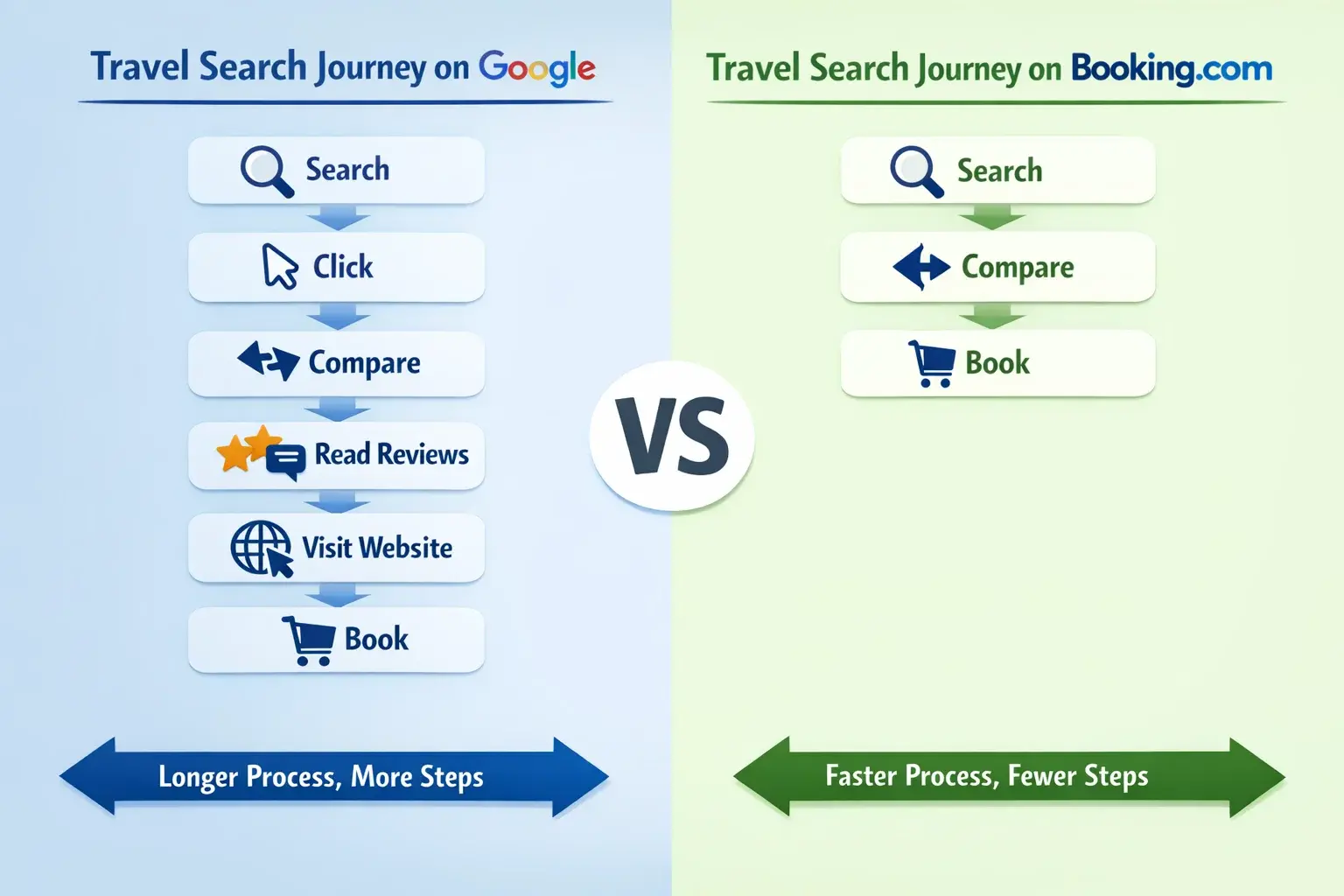
Google still provides valuable travel information, but the booking process remains fragmented. Users must navigate multiple steps before completing a booking, which increases friction and reduces conversions.
Google Journey
Search → Click → Compare → Read Reviews → Visit Website → Book
Booking com Journey
Search → Compare → Book (All in One)
This reduced friction leads to faster booking decisions and improved user satisfaction. When travelers can complete everything in one place, they are more likely to finalize their bookings quickly.
For businesses, building end-to-end travel booking platforms is key. Web portal development services are essential to provide seamless booking journeys where users can search, compare, and book all in one place.
These platforms allow companies to control the entire user experience, from discovery to payment, which significantly improves customer satisfaction and conversion rates.

Mobile-First Travel Technology Is Driving OTA Growth
Mobile devices now dominate travel bookings. Travelers frequently book hotels while commuting, traveling, or even at the last minute. This is why Booking com has invested heavily in mobile-first travel technology. If you’re a travel app development company, you should be aware that mobile-optimized platforms can drastically improve user experience and conversion rates.
Key mobile-focused features include:
- One-tap hotel booking
- Last-minute deals
- Instant confirmations
- Saved preferences
- Personalized hotel recommendations
Unlike Google, which redirects users to third-party sites, Booking com keeps users inside its ecosystem. This significantly improves the user experience and conversion rates.
Business Opportunity
Companies building travel booking platforms must focus on mobile-first architecture because mobile users expect fast and smooth interactions. Platforms that fail to optimize for mobile often experience higher bounce rates and lower conversions.
Important mobile-focused capabilities include:
- Mobile-first UI
- Fast loading performance
- App-like web experience
- Progressive Web Apps (PWA)
These features not only improve engagement but also help platforms compete with global travel booking platforms.
Google Is Fueling Booking com Growth (Indirectly)
Even though Google still drives traffic, most conversions happen on OTAs like Booking com. Google acts as a discovery tool, while Booking com captures the booking and manages the customer relationship.
What typically happens:
- OTAs dominate paid ads
- Booking com ranks high organically
- Users land on Booking com
- Users complete bookings
This trend highlights the growing Booking com vs Google competition in travel search. Businesses must understand that search visibility alone is not enough. The platform experience plays a crucial role in conversions.
For businesses, this means:
- SEO is still important
- Platform experience matters more
- Conversion-focused UI is essential
The future of travel booking platforms lies in combining search and booking into one seamless experience.
Massive Inventory and Global Reach
One of Booking com biggest advantages is its massive inventory. With millions of properties worldwide, users can easily find accommodations that match their preferences, budgets, and travel goals.
Booking com offers:
- Budget hotels
- Luxury resorts
- Apartments and rentals
- Business travel accommodations
This wide inventory improves user trust and engagement. Users prefer platforms where they can compare multiple options without leaving the platform.
Businesses building travel booking platforms should consider implementing:
- Multi-hotel listing system
- Vendor onboarding panel
- Inventory management
- Dynamic pricing
These features allow platforms to scale and compete effectively while attracting hotel partners.
Reviews, Trust, and Verified Experiences
Trust is a major factor influencing hotel bookings 2026. Travelers want reliable reviews before making decisions. Booking com addresses this by offering verified reviews from real guests.
Booking com provides:
- Verified guest reviews
- Cleanliness ratings
- Location ratings
- Value ratings Businesses building travel platforms should include strong review management systems that build trust and transparency.
Important features include:
- Verified review system
- Rating algorithms
- Review moderation
- Guest feedback dashboard
These features improve credibility and encourage more bookings.
AI Is Transforming Hotel Search
AI is transforming travel technology and changing how travelers search for hotels. Instead of traditional keyword searches, users now rely on conversational and intent-based search queries.
- Best hotels under $200
- Family hotels near beach
- Business hotels near airport
AI-powered systems understand user intent and provide more relevant results. This improves discovery and increases booking conversions. Businesses investing in AI‑powered travel platforms gain a strong competitive advantage. At codemech solutions, we help businesses implement AI‑powered search, recommendation engines, and smart booking experiences designed for scalability.
Read Also : Travel Agency Growth Challenges in 2026
Personalization and Loyalty Programs
Personalization is becoming essential for modern travel platforms. Booking com uses AI and behavioral tracking to recommend hotels based on user preferences and past bookings.
Businesses can implement:
- Loyalty rewards
- Discount engines
- Personalized dashboard
- User preferences
These features increase user retention and repeat bookings.
Corporate Travel Booking Is Growing Rapidly
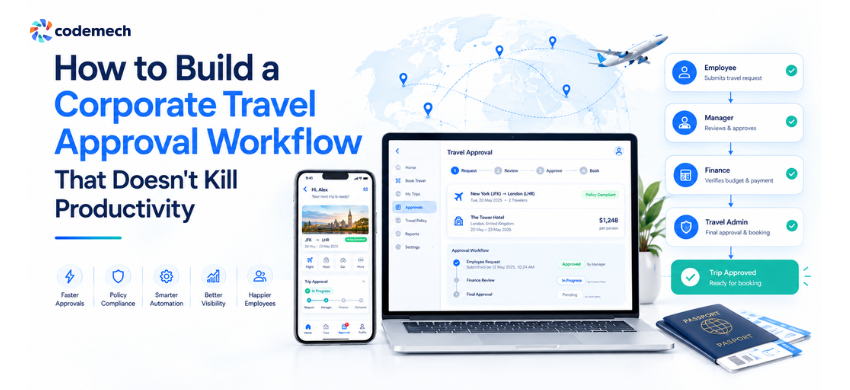
Corporate travel is a growing segment in travel booking platforms. Businesses require structured travel management tools to manage employee travel efficiently.
Platforms should include:
- Team travel booking
- Approval workflows
- Budget control
- Invoice management
- Travel policy settings
These corporate booking solutions with approval workflows allow businesses to manage travel efficiently and open new revenue opportunities.
Development Features Required to Build Travel Platforms
To build modern travel booking platforms, businesses need a complete ecosystem including admin, vendor, and user systems. These platforms function as multi-role applications where each user type has different responsibilities and features.
Admin Panel should manage:
- Hotels
- Bookings
- Users
- Commission settings
Vendor Panel should manage:
- Hotel onboarding
- Room pricing
- Availability
- Booking notifications
User Panel should provide:
- Hotel search
- Booking history
- Wishlist
- Reviews
These features create a complete and scalable travel platform.
Technical Architecture for Travel Platforms
Modern travel technology platforms require scalable architecture capable of handling high traffic and real-time bookings.
Frontend:
- React / Angular
- Responsive UI
- Fast performance
Backend:
- Node.js / Java / .NET
- API-based architecture
- Microservices
Database:
- MongoDB / PostgreSQL
- Real-time booking system
Cloud:
- AWS / Azure
- Auto scaling
- Load balancing
This architecture supports scalable hotel bookings 2026 platforms.
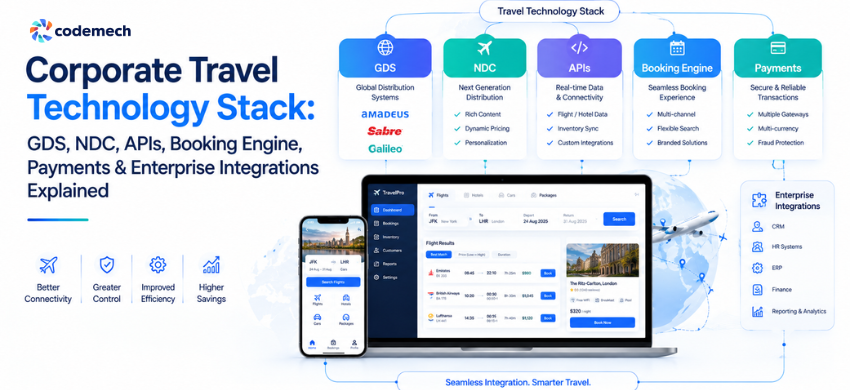
Integrations Required for Travel Platforms
Travel booking platforms depend heavily on integrations to provide seamless experiences.
Essential integrations include:
- Payment gateways
- Hotel APIs
- Maps integration
- Email notifications
- SMS alerts
- Analytics tools These integrations improve automation and platform efficiency.
Revenue Models for Travel Platforms
Businesses building travel booking platforms can generate revenue through multiple monetization strategies.
Common revenue models include:
- Booking commissions
- Featured listings
- Subscription plans
- Corporate packages
- Advertising This makes travel platforms scalable and profitable.
Future of Travel Technology
Future travel booking platforms will include:
- AI travel assistants
- Voice booking
- Smart analytics
- Automated corporate travel booking
These innovations will shape hotel bookings 2026 and beyond.
Technology integrations also play a key role in staying competitive — learn more in our Amadeus API Integration Guide.
Why Businesses Should Build Travel Platforms Now
Market trends show increasing demand for:
- Direct bookings
- Mobile bookings
- AI-powered travel search
- Corporate travel management
Businesses investing in travel technology today will gain competitive advantage.
Conclusion
Booking com is beating Google in hotel searches in 2026 because it offers:
- End-to-end booking experience
- Personalized hotel recommendations
- Corporate travel booking
- AI-powered search
- Mobile-first experience
This shift creates massive opportunities for travel startups, hotel owners, agencies, and enterprises.
Businesses looking to build scalable travel platforms should partner with an experienced Custom Software Development Company in india that understands travel technology, AI integration, and scalable architecture.
The future of travel belongs to travel booking platforms that combine search, decision, and booking and businesses investing today will define the next generation of travel experiences.