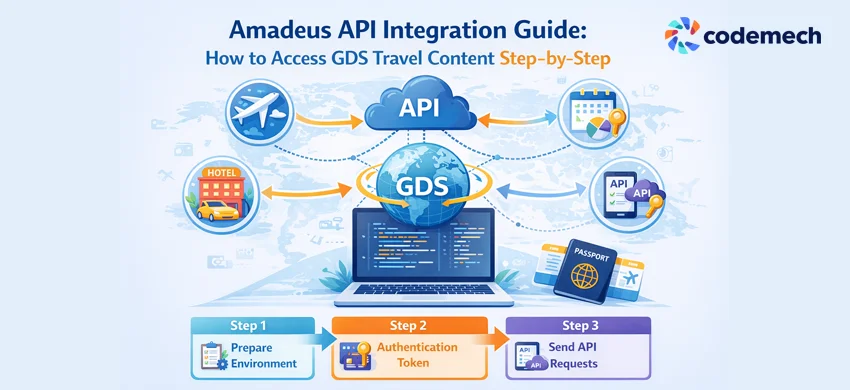
Understanding the Importance of API Integration in Travel
In today’s digital era, the travel industry is evolving at an unprecedented pace. Travel agencies, online booking platforms, and tourism service providers are increasingly adopting advanced technologies to streamline operations, improve booking experiences, and stay competitive in a digital-first marketplace.
This Amadeus API Integration Guide helps travel businesses understand how modern API connectivity enables seamless access to global travel data and booking systems.
One of the most impactful technological advancements in modern travel platforms is Amadeus API Integration. Global Distribution System (GDS) APIs such as Amadeus enable travel platforms to access global travel data including flights, hotels, car rentals, and ancillary services through a unified interface.
APIs act as communication bridges between different software systems, allowing them to exchange data in real time. This real-time connectivity allows travel platforms to display accurate information about availability, pricing, schedules, and travel options without manual intervention.
Modern travel platforms are often developed by a specialized Travel Software Development Company that builds scalable booking engines, itinerary management systems, and travel marketplaces using advanced API architectures that support Amadeus API Integration and other GDS connectivity solutions.
API integration enables travel businesses to offer several critical capabilities including: • real-time flight search • hotel availability access • automated ticket booking • dynamic pricing updates • personalized travel recommendations
These capabilities significantly improve operational efficiency and customer satisfaction.
For example, a travel website can instantly display updated flight schedules and seat availability when a customer performs a search. This ensures travelers receive accurate booking options without delays. This real-time capability is a major advantage explained throughout this Amadeus API Integration Guide.
Companies delivering advanced Travel software solutions often integrate multiple APIs from airlines, hotels, payment gateways, and GDS platforms to build comprehensive digital travel ecosystems powered by Amadeus API Integration.
Additionally, API-driven travel platforms enable businesses to analyze customer behavior and booking patterns. This allows companies to create personalized travel offers, improve conversion rates, and strengthen long-term customer loyalty. Automation is another key benefit of API integration. Instead of manually updating travel content, systems automatically synchronize inventory, booking confirmations, cancellations, and pricing updates.
Technology partners such as Codemech Solutions help travel businesses implement scalable API architectures that integrate booking engines, customer platforms, and travel content providers into unified systems using modern Amadeus API Integration frameworks. In short, API integration has become the backbone of modern travel platforms, enabling real-time booking experiences, operational efficiency, and scalable digital travel infrastructure. This Amadeus API Integration Guide demonstrates how travel companies can leverage GDS APIs to build advanced digital booking ecosystems.
Prerequisites for Amadeus API Integration
Before implementing Amadeus API Integration, organizations should ensure they meet several technical and operational prerequisites to guarantee a smooth implementation process.
This section of the Amadeus API Integration Guide outlines the most important technical requirements needed for successful integration.
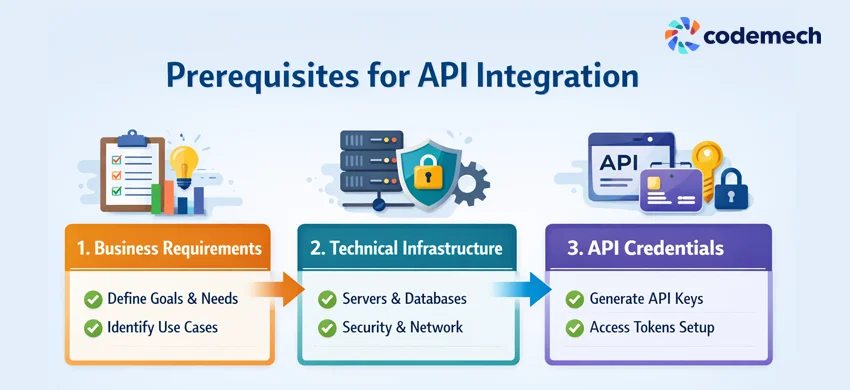
1. Clearly Defined Business Requirements
First, businesses must identify their primary integration objectives. This could include: • flight booking systems • hotel reservation systems • travel marketplace platforms • itinerary management systems
Companies building travel platforms often partner with a Travel App Development Company to design scalable mobile and web applications that support GDS integrations and Amadeus API Integration capabilities.
Clear requirements help development teams choose the correct API endpoints and integration architecture.
2. Technical Infrastructure
Successful Amadeus API Integration requires a stable and scalable technical environment. Organizations should ensure they have: • reliable cloud infrastructure • secure API gateways • scalable backend systems • high-performance databases
Many travel platforms are built using modern Web app development services that support high API traffic volumes and real-time data processing required for Amadeus API Integration.
Companies often collaborate with a Web application development agency to build scalable architectures capable of handling thousands of booking requests per minute.
3. API Credentials and Authentication Setup
To access the Amadeus API, developers must first create an account in the Amadeus Developer Portal and obtain: • API key • API secret • OAuth access tokens
These credentials allow secure communication between the travel platform and Amadeus servers and are essential for completing Amadeus API Integration successfully.
Experienced developers from an API development company can help implement secure authentication workflows and optimize API request handling.
Setting Up Your Amadeus Developer Account
Creating a developer account is the first step toward completing Amadeus API Integration for travel platforms. This step is an essential part of the Amadeus API Integration Guide for developers and travel technology companies. Follow these steps:
Step 1: Register on the Amadeus Developer Portal
Visit the official Amadeus for Developers platform and create an account using your email and company information. After registration, verify your email address to activate the account and start the Amadeus API Integration process.
Step 2: Create a New Application
Once logged into the developer portal:
- Navigate to My Apps
- Click Create New App
- Enter application details
- Generate API credentials
The system will provide: • API key • API secret These credentials allow your platform to authenticate API requests during Amadeus API Integration.
Many SaaS travel platforms use this architecture when building scalable booking products through a SaaS Development Company that specializes in cloud-based travel platforms.
Step 3: Review API Documentation
The Amadeus documentation includes: • API endpoints • request parameters • authentication workflows • response formats • error handling Development teams providing SaaS development services often rely heavily on this documentation to build scalable travel SaaS platforms with booking and reservation systems powered by Amadeus API Integration.
Step-by-Step Guide to Integrating Amadeus API
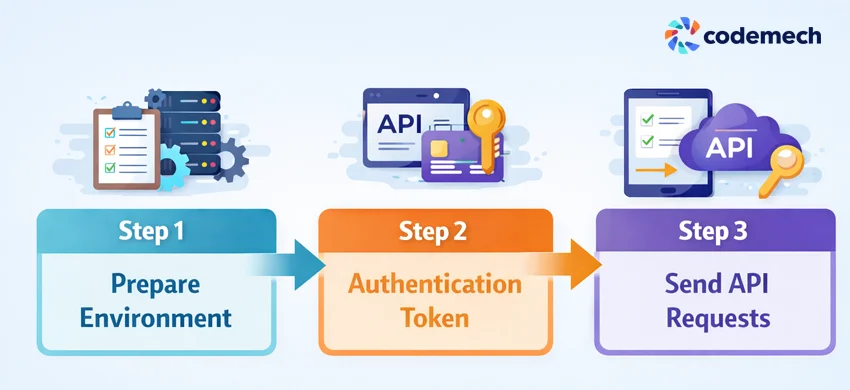
The integration process typically involves the following steps. This section of the Amadeus API Integration Guide explains how developers can implement API connectivity in travel platforms.
Step 1: Prepare Your Development Environment
Developers should install necessary tools including: • code editor • HTTP client libraries • JSON parsing libraries • version control systems like Git
Many companies choose to Hire Dedicated Software Developers experienced in travel API integration and Amadeus API Integration to speed up development and reduce technical complexity.
Step 2: Generate an Authentication Token
To authenticate requests, developers must generate an OAuth token using their API key and secret.
The authentication request is sent to the Amadeus authentication endpoint, which returns an access token used for all API calls. This token is required for every Amadeus API Integration request.
Step 3: Send API Requests
Developers can now start interacting with Amadeus endpoints such as: • flight search API • hotel availability API • airport search API • travel recommendation API
Requests typically include parameters such as: • departure city • destination • travel dates • passenger count The response contains travel data in JSON format which must be parsed and displayed to users. This is the core functionality explained in this Amadeus API Integration Guide.
Common Challenges in Amadeus API Integration
Despite its benefits, developers may face some integration challenges during Amadeus API Integration implementation.
API Rate Limits
GDS APIs enforce request limits to prevent system overload.
Development teams often implement caching layers and request queues. Companies providing DevOps Automation Services frequently automate these workflows to improve system performance.
Error Handling
API responses may fail due to: • invalid parameters • authentication issues • network interruptions
Implementing structured error handling ensures applications remain stable.
Expert teams offering DevOps Automation Consulting often build automated monitoring systems that detect and resolve API failures quickly during Amadeus API Integration workflows.
Data Synchronization Issues
Travel inventory changes frequently. Developers must implement real-time updates or scheduled refresh processes to maintain accurate travel content when using Amadeus API Integration.
Testing Your Amadeus API Integration
Testing ensures your Amadeus API Integration functions correctly before production deployment.
Developers should test: • individual endpoints • authentication workflows • error responses • booking scenarios
Tools such as Postman and cURL help validate API requests and responses.
Load testing tools like JMeter can simulate large traffic volumes to verify system performance. Technology partners like Codemech Solutions often implement automated testing pipelines to ensure reliable travel booking systems and scalable Amadeus API Integration performance.
Best Practices for Maximizing GDS Travel Content
To fully utilize Amadeus travel APIs, companies should follow several best practices when implementing Amadeus API Integration.
Implement Data Caching
Caching frequently requested travel data reduces API requests and improves response times.
Optimize API Request Handling
Efficient request handling ensures platforms remain responsive during peak booking periods.
Personalize Travel Experiences
Using traveler data and booking history allows platforms to recommend flights, hotels, and travel packages. These strategies help maximize the value of Amadeus API Integration for travel platforms.
Future Trends in Travel API Integration
Travel API ecosystems are evolving rapidly with new technologies shaping the future of Amadeus API Integration and digital travel platforms.
AI-Powered Travel Assistants
AI chatbots and virtual assistants can provide: • travel recommendations • automated bookings • real-time travel alerts
Blockchain for Secure Travel Transactions
Blockchain technology may improve travel booking transparency and fraud prevention.
Mobile-First Travel Experiences
Mobile apps powered by APIs allow travelers to: • search flights • manage bookings • receive travel alerts
The integration of APIs with emerging technologies like AI, IoT, and AR will continue transforming how travel platforms operate and expand the capabilities of Amadeus API Integration.
To see how distribution and search competition affect travel businesses, explore why Booking.com Is Beating Google in Hotel Searches in 2026.
Conclusion
Amadeus API Integration provides travel businesses with direct access to global travel inventory, enabling real-time booking capabilities and automated travel management.
This Amadeus API Integration Guide demonstrates how businesses can implement structured API strategies to build scalable travel platforms that offer seamless booking experiences, personalized services, and efficient operations.
As digital travel ecosystems continue to evolve, API-driven platforms powered by Amadeus API Integration will remain at the center of innovation in the travel industry.