The global travel industry has undergone a significant digital transformation, with travelers increasingly relying on online platforms to book flights, hotels, holiday packages, car rentals, cruises, and travel experiences. Whether it's a travel agency, online travel agency (OTA), destination management company (DMC), or tour operator, customers now expect fast, secure, and seamless booking experiences.
To meet these expectations, many businesses are investing in custom travel portals that streamline bookings, automate operations, and provide personalized customer experiences. However, one of the first questions decision-makers ask is: "How much does a travel portal cost to develop?"
The answer depends on several factors, including project scope, features, integrations, UI/UX complexity, technology stack, security requirements, and third-party APIs. Understanding these cost drivers helps businesses plan their budgets more effectively and avoid unexpected expenses.
As an experienced Travel Portal Development Company, Codemech Solutions helps startups, travel agencies, and enterprises build scalable, AI-ready travel portals tailored to their business goals. This guide explains the complete cost structure of travel portal development, helping you make informed investment decisions.
What Is a Travel Portal?
A travel portal is a web-based platform that enables users to search, compare, book, and manage travel-related services from a single interface.
Depending on the business model, a travel portal may allow customers to:
- Search and book flights.
- Reserve hotels.
- Purchase holiday packages.
- Book tours and activities.
- Rent vehicles.
- Manage travel itineraries.
- Make secure online payments.
Modern travel portals integrate with multiple suppliers and Global Distribution Systems (GDS), enabling real-time availability, pricing, and booking confirmations.
Professional Travel Portal Development Services help businesses create customized platforms that improve customer experience while automating back-office operations.
Types of Travel Portals
Travel portals vary based on business objectives and target users.
B2C Travel Portal
Designed for direct customer bookings.
Ideal for:
- Online Travel Agencies (OTAs)
- Tour Operators
- Holiday Companies
B2B Travel Portal
Allows travel agents to access negotiated pricing, inventory, and booking tools.
Suitable for:
- Wholesale travel agencies
- Destination Management Companies
- Corporate travel providers
B2B2C Travel Portal
Combines both business and customer functionality within a single platform.
This model enables travel businesses to manage agents while serving end customers simultaneously.
Corporate Travel Portal
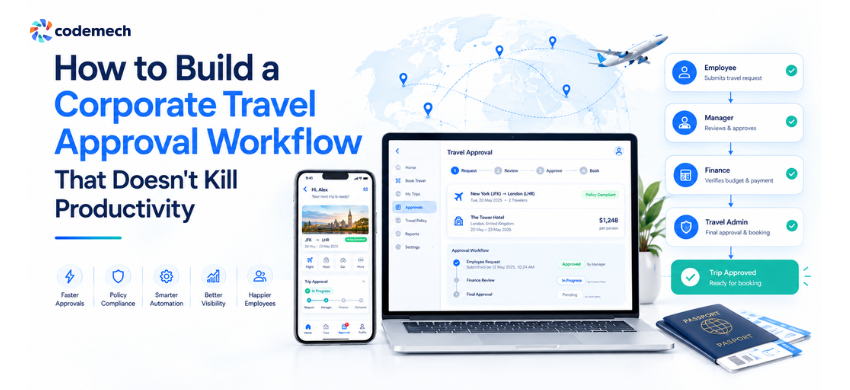
Designed specifically for organizations managing employee travel, approvals, expense tracking, and corporate bookings.
Essential Features of a Modern Travel Portal:
The features included in your portal significantly influence development cost.
Essential modules include:
User Registration & Login: Secure authentication with social login and multi-factor authentication.
Flight Search & Booking: Real-time flight availability, fare comparison, and booking confirmation.
Hotel Booking: Search, compare, and reserve hotels with live pricing.
Holiday Packages: Customizable tour packages and itinerary management.
Payment Gateway Integration: Secure payment processing using multiple payment methods.
Booking Management: Customers can modify, cancel, or manage reservations.
Admin Dashboard: Manage users, suppliers, bookings, commissions, reports, and analytics.
Customer Support: Live chat, AI chatbot, ticketing, and helpdesk integration.
Factors That Affect Travel Portal Development Cost:
No two travel portals cost the same. Several technical and business factors influence the overall investment.
Project Complexity
A basic portal with limited functionality costs significantly less than a multi-vendor enterprise platform with AI, automation, and advanced integrations.
Number of Features
The more features included, the greater the development effort.
Examples include:
- Multi-language support
- Multi-currency support
- Loyalty programs
- Dynamic pricing
- AI recommendations
- Customer dashboards
- Agent management
Platform Type
Development costs differ depending on whether you need:
- Web portal only
- Mobile application
- Admin dashboard
- Customer portal
- Agent portal
- Supplier portal
Customization Requirements
Custom workflows, branding, dashboards, and business logic increase development time but deliver greater long-term value.
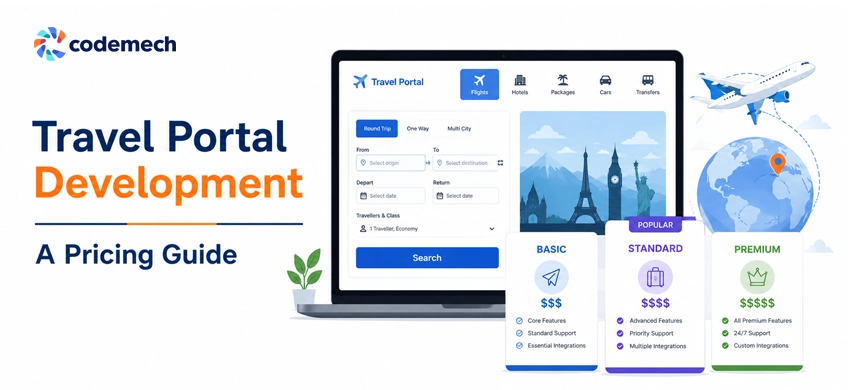
Travel Portal Development Average Cost* Breakdown
The following estimates provide a general pricing* framework. Actual costs vary based on requirements, technology choices, and integration complexity.
|
Portal Type |
Estimated Cost* (In USD) |
|
Basic Travel Portal |
$25 K - $50 K |
|
Standard Travel Portal |
$50 K to $100 K |
|
Advanced Multi-Vendor Portal |
$100 K to $200 K |
|
Enterprise Travel Portal |
Over $200 K |
A custom Travel Booking software Development project with AI, automation, and multiple API integrations typically falls within the mid-to-enterprise range.
Note*: The prices listed above are average estimates cost for travel portal development. Please confirm the final pricing* details with our Codemech Solutions team or request a detailed project quote before making a decision.
Third-Party API Costs
Travel portals rely on APIs to provide real-time inventory and booking capabilities.
Common integrations include:
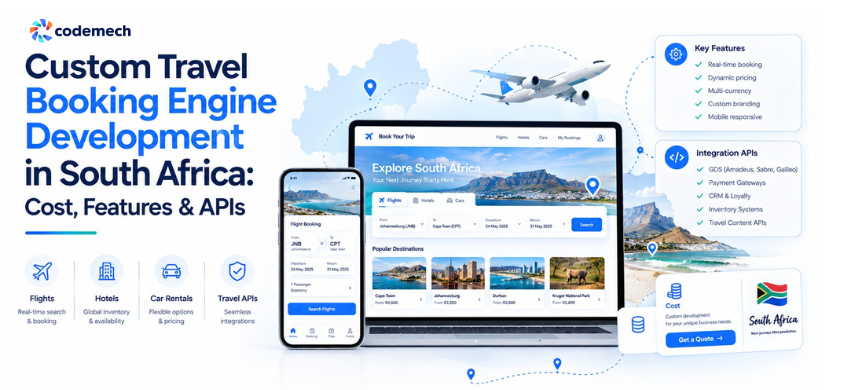
Amadeus API:
- Flight Search
- Hotel Booking
- Airport Data
- Destination Content
Sabre API:
- Airline Reservations
- Hotel Inventory
- Car Rentals
Travelport API:
- Multi-GDS Connectivity
- Flight Booking
- Hotel Booking
- Vehicle Rentals
Additional APIs may include:
- Google Maps
- Stripe
- PayPal
- Currency Exchange
- Weather Services
- SMS Notifications
Some providers charge licensing fees, transaction fees, or usage-based pricing. These ongoing costs should be included in your budget planning.
UI/UX Design Cost:
An intuitive interface improves customer engagement and conversion rates.
UI/UX design typically includes:
- User research
- Wireframes
- Interactive prototypes
- Visual design
- Responsive layouts
- Accessibility optimization
Custom, conversion-focused designs generally require a larger investment than template-based interfaces but deliver better long-term ROI.
Development Cost:
The development phase usually represents the largest portion of the project budget.
Typical activities include:
- Frontend development
- Backend development
- Database design
- API integrations
- Payment gateway implementation
- Booking engine development
- Admin panel creation
- Testing and quality assurance
- Deployment
Businesses investing in Custom Travel Portal Development often prioritize scalable architectures that support future expansion.
Maintenance Cost:
Launching the portal is only the beginning.
Annual maintenance generally includes:
- Security updates
- Bug fixes
- Performance optimization
- Server monitoring
- API updates
- Feature enhancements
- Cloud infrastructure management
- Technical support
Many businesses allocate 15–20% of the initial development cost annually for maintenance and ongoing improvements.
Hidden Costs to Consider:
Many organizations underestimate additional expenses beyond development.
Potential hidden costs include:
- API subscription fees
- Cloud hosting
- Domain registration
- SSL certificates
- Third-party software licenses
- SMS and email services
- Payment gateway transaction fees
- Security audits
- Backup and disaster recovery
- Compliance requirements
Including these items in your budget helps prevent unexpected financial surprises.
Cost-Saving Tips Without Compromising Quality
Reducing costs should not mean sacrificing performance or scalability.
Consider these strategies:
Start with an MVP: Launch with core features first, then expand based on customer feedback.
Prioritize Essential Integrations: Only integrate APIs required during the initial launch.
Build Scalable Architecture: Design the platform to support future features without major redevelopment.
Use Cloud Infrastructure: Cloud hosting minimizes infrastructure costs while supporting scalability.
Choose an Experienced Development Partner: Working with an experienced development team reduces costly mistakes and project delays.
Why Choose Codemech Solutions for Travel Portal Development?
Selecting the right technology partner is just as important as defining the right feature set.
At Codemech Solutions, we specialize in developing scalable, secure, and feature-rich travel portals designed to support business growth.
Industry Expertise: Our team has extensive experience building travel technology solutions for travel agencies, OTAs, tour operators, hotels, airlines, and enterprise travel businesses.
Custom Development Approach: Every portal is tailored to your business model, workflows, customer journey, and growth objectives.
Advanced Technology Stack: We use modern technologies, cloud-native architecture, AI capabilities, and scalable frameworks to ensure long-term performance.
Seamless API Integrations: We integrate leading travel APIs, payment gateways, CRM systems, and third-party platforms for a connected travel ecosystem.
End-to-End Development: From strategy and UI/UX design to development, testing, deployment, and ongoing support, we provide complete Travel Portal Solutions under one roof.
Whether you're launching a startup or modernizing an enterprise travel platform, Codemech Solutions can help you build a future-ready portal that delivers measurable business results.
Conclusion:
Developing a travel portal is a strategic investment that can improve customer experiences, automate operations, and unlock new revenue opportunities. While costs vary depending on features, integrations, and project complexity, understanding the major pricing factors allows businesses to plan confidently and avoid unnecessary expenses.
Businesses should focus on long-term value rather than simply choosing the lowest development cost. A well-designed portal with scalable architecture, secure integrations, and an intuitive user experience delivers higher ROI and supports sustainable growth.
If you're planning to build a custom travel portal, partnering with an experienced Travel Portal Development Company like Codemech Solutions ensures your platform is designed for performance, scalability, and future innovation.