The healthcare industry operates in one of the most dynamic and highly regulated environments. Hospitals, clinics, diagnostic laboratories, healthcare networks, and medical institutions manage thousands of employees across multiple departments, shifts, and locations every day. From doctors and nurses to administrative staff, technicians, and support personnel, managing a healthcare workforce efficiently has become increasingly complex.
Many healthcare organizations still rely on spreadsheets, manual attendance systems, disconnected payroll software, or outdated HR applications. These fragmented processes often result in scheduling conflicts, payroll errors, compliance risks, inefficient onboarding, and limited workforce visibility.
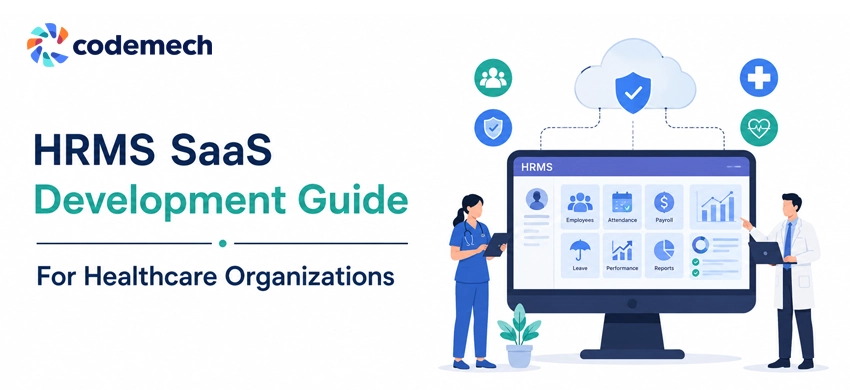
To overcome these challenges, healthcare providers are increasingly investing in HRMS SaaS Development. A cloud-based Human Resource Management System (HRMS) centralizes employee information, automates HR operations, simplifies compliance management, and provides real-time workforce insights through a single platform.
Unlike traditional on-premise software, SaaS-based HRMS platforms offer flexibility, scalability, lower infrastructure costs, and continuous updates, making them ideal for modern healthcare organizations.
As an experienced Healthcare Software Development Company, Codemech Solutions develops secure, scalable, and feature-rich HRMS SaaS platforms tailored to the operational needs of hospitals, healthcare groups, clinics, and medical startups. This guide explains everything you need to know about developing an HRMS SaaS platform—from architecture and technology stack to security, compliance, costs, and future trends.
What Is HRMS SaaS?
A Human Resource Management System (HRMS) is software designed to manage an organization's workforce throughout the employee lifecycle. It combines HR processes such as recruitment, employee records, attendance, payroll, leave management, performance evaluation, and reporting into a single digital platform.
When delivered through a Software-as-a-Service (SaaS) model, the HRMS is hosted on cloud infrastructure and accessed through a web browser or mobile application. Organizations subscribe to the platform rather than installing software on local servers.
A modern SaaS HRMS Platform enables healthcare organizations to:
- Manage employee information from a centralized dashboard.
- Automate repetitive HR tasks.
- Support multiple hospitals or branches through a single system.
- Provide self-service portals for employees and managers.
- Scale resources as workforce requirements grow.
- Receive automatic software updates without downtime.
Unlike traditional HR software, SaaS HRMS solutions reduce IT maintenance, improve accessibility, and accelerate digital transformation.
Why Healthcare Organizations Need HRMS SaaS
Healthcare organizations face unique workforce management challenges that differ significantly from most other industries.
Complex Workforce Structure
Hospitals employ a wide variety of professionals, including:
- Doctors
- Nurses
- Surgeons
- Laboratory Technicians
- Pharmacists
- Reception Staff
- Administrative Teams
- Maintenance Personnel
- Contract Employees
Managing these diverse employee groups manually becomes increasingly difficult as organizations expand.
Shift Scheduling
Healthcare facilities operate 24/7.
Managing:
- Day shifts
- Night shifts
- Emergency shifts
- Rotational duties
- On-call schedules
requires intelligent scheduling capabilities that reduce conflicts while ensuring adequate staffing.
Compliance Requirements
Healthcare organizations must comply with various labor regulations, employee policies, and industry-specific standards.
A centralized HRMS helps maintain:
- Employee certifications
- License renewals
- Mandatory training records
- Audit logs
- Attendance compliance
Payroll Accuracy
Healthcare payroll often includes:
- Overtime
- Night shift allowances
- Holiday pay
- Performance incentives
- Contract staff payments
Automated payroll processing reduces calculation errors while improving employee satisfaction.
Employee Self-Service
Healthcare professionals prefer digital access to:
- Payslips
- Leave requests
- Attendance records
- Shift schedules
- Performance reviews
- HR announcements
Self-service portals reduce administrative workload while improving employee engagement.
Key Features Every Healthcare HRMS SaaS Platform Should Have
A healthcare HRMS should go beyond basic HR functionality. It must support workforce management, compliance, automation, and operational efficiency.
Employee Information Management
Maintain a centralized database containing:
- Personal information
- Employment history
- Qualifications
- Certifications
- Contracts
- Emergency contacts
Recruitment & Applicant Tracking
Streamline hiring through:
- Job postings
- Resume management
- Candidate tracking
- Interview scheduling
- Offer management
Attendance Management
Track attendance using:
- Biometric devices
- RFID cards
- Mobile check-ins
- GPS attendance
- Web login tracking
Shift Scheduling
Automatically assign:
- Daily shifts
- Rotational shifts
- Emergency coverage
- Department staffing
while minimizing scheduling conflicts.
Payroll Management
Support:
- Salary processing
- Overtime calculations
- Bonuses
- Tax deductions
- Benefits administration
- Direct deposits
Leave Management
Employees can request:
- Annual leave
- Sick leave
- Casual leave
- Maternity leave
- Emergency leave
Managers can approve or reject requests digitally.
Performance Management
Track:
- KPIs
- Performance reviews
- Goals
- Feedback
- Promotions
Learning & Training Management
Healthcare organizations frequently conduct compliance and skill development programs.
An HRMS should manage:
- Online courses
- Certification tracking
- Training schedules
- Assessment reports
Employee Self-Service Portal
Provide employees with access to:
- Attendance records
- Leave balances
- Payroll details
- Shift schedules
- Company announcements
Reports & Analytics
Generate real-time reports for:
- Workforce utilization
- Attendance trends
- Payroll analysis
- Employee turnover
- Recruitment performance
HRMS SaaS Architecture Explained
A scalable HRMS should be designed using cloud-native architecture to ensure reliability, flexibility, and future growth.
Multi-Tenant Architecture
A single application serves multiple organizations while securely isolating each tenant's data.
Benefits include:
- Lower infrastructure costs
- Easier maintenance
- Faster updates
- Better scalability
Cloud Infrastructure
Deploying on AWS, Microsoft Azure, or Google Cloud ensures:
- High availability
- Disaster recovery
- Auto scaling
- Secure backups
API Layer
RESTful APIs enable integration with:
- Payroll systems
- ERP platforms
- Biometric devices
- Accounting software
- Identity providers
Authentication Layer
Implement:
- OAuth 2.0
- JWT authentication
- Multi-factor authentication
- Role-based access control
to protect sensitive employee data.
Database Layer
A robust database stores:
- Employee records
- Attendance
- Payroll
- Leave requests
- Performance data
- Audit logs
while ensuring high performance and reliability.
HRMS SaaS Development Process
Developing an HRMS platform requires a structured approach to ensure scalability, security, and long-term maintainability.
Step 1: Discovery & Requirement Analysis
Understand:
- Business goals
- HR workflows
- Compliance requirements
- User roles
- Integration needs
Step 2: UI/UX Design
Create intuitive interfaces for:
- Employees
- HR teams
- Managers
- Administrators
Step 3: Database & System Architecture
Design scalable architecture that supports future expansion.
Step 4: Development
Develop modules such as:
- Employee Management
- Payroll
- Attendance
- Recruitment
- Performance Management
using modern development frameworks.
Step 5: Third-Party Integrations
Connect with:
- Biometric systems
- Payroll providers
- Accounting software
- Identity providers
- Notification services
Step 6: Testing
Perform:
- Functional testing
- Security testing
- Performance testing
- User acceptance testing
Step 7: Deployment & Maintenance
Deploy to cloud infrastructure and provide continuous monitoring, updates, and support.
Recommended Technology Stack
Choosing the right technology stack is critical for long-term success.
Frontend
- Angular
- React
Backend
- Java Spring Boot
- .NET Core
- Node.js
Database
- PostgreSQL
- MongoDB
- MySQL
Cloud
- AWS
- Microsoft Azure
- Google Cloud Platform
DevOps
- Docker
- Kubernetes
- CI/CD Pipelines
Security
- OAuth 2.0
- JWT
- SSL/TLS Encryption
This modern stack supports enterprise-grade scalability, performance, and maintainability.
Security Best Practices
Healthcare HR systems contain highly sensitive employee information, making security a top priority.
Essential practices include:
- End-to-end data encryption
- Multi-factor authentication
- Role-based access control
- Secure API authentication
- Audit logging
- Regular vulnerability assessments
- Automated backups
- Disaster recovery planning
A secure platform builds trust and reduces the risk of data breaches.
HRMS SaaS Compliance for Healthcare
Compliance is critical in healthcare.
Depending on the region, organizations may need to address standards such as:
- HIPAA (United States)
- GDPR (European Union)
- ISO 27001
- SOC 2
- Local labor regulations
A compliant HRMS should support secure data handling, audit trails, access controls, and document retention policies.
HRMS SaaS Development Cost
The cost of developing an HRMS SaaS platform depends on project scope, feature set, integrations, security requirements, and scalability.
|
Project Type |
Estimated Cost (USD) |
|
MVP HRMS SaaS |
$25K to $50K |
|
Standard HRMS SaaS |
$50K to $100K |
|
Enterprise HRMS SaaS |
$100K - $200K Over |
Note*: The prices listed above are average estimates cost for HRMS SaaS Development. Please confirm the final pricing* details with our Codemech Solutions team or request a detailed project quote before making a decision.
Key cost factors include:
- Number of modules
- Mobile application support
- AI capabilities
- Third-party integrations
- Compliance requirements
- Multi-tenant architecture
- Reporting and analytics
A phased MVP approach can help organizations validate requirements before investing in advanced functionality.
Benefits of HRMS SaaS for Healthcare Organizations
Implementing Healthcare HRMS Software offers significant operational and strategic advantages.
Improved Workforce Management
Centralize employee records, scheduling, attendance, and payroll in one platform.
Increased Operational Efficiency
Automate repetitive HR processes, reducing manual effort and administrative costs.
Better Compliance
Track certifications, licenses, training, and regulatory requirements more effectively.
Enhanced Employee Experience
Provide self-service access to payroll, leave, schedules, and HR information.
Scalability
Expand the platform as the organization grows without major infrastructure investments.
Data-Driven Decisions
Leverage dashboards and analytics to improve workforce planning and performance.
Common Challenges During Development
Healthcare HRMS projects often encounter challenges such as:
- Legacy system integration
- Data migration
- User adoption
- Complex approval workflows
- Security and privacy requirements
- Performance optimization
- Multi-location management
Working with an experienced HRMS Software Development Company helps minimize these risks through proper planning and technical expertise.
Future Trends
The future of HRMS SaaS is driven by automation and artificial intelligence.
Emerging trends include:
- AI-powered recruitment
- Predictive workforce analytics
- Intelligent shift scheduling
- Employee wellness tracking
- Conversational HR chatbots
- Mobile-first HR experiences
- Workflow automation
- Real-time workforce insights
Organizations that adopt these innovations will be better equipped to manage increasingly complex healthcare workforces.
Why Choose Codemech Solutions?
Choosing the right development partner is essential for building a secure and scalable HRMS platform.
At Codemech Solutions, we specialize in Custom HRMS Development tailored to the healthcare industry's unique operational requirements.
Why Partner With Us?
- Expertise in healthcare software development.
- Custom SaaS architecture designed for scalability.
- Secure cloud-native application development.
- Integration with biometric devices, payroll systems, and third-party APIs.
- Modern UI/UX for web and mobile platforms.
- End-to-end development, deployment, and long-term maintenance.
- Agile development process with transparent communication.
Whether you're building a new HRMS platform or modernizing an existing system, our team delivers solutions that support long-term digital transformation.
Conclusion:
Healthcare organizations require more than basic HR software—they need scalable, secure, and intelligent workforce management platforms capable of supporting complex operations and regulatory requirements.
Investing in HRMS Software Solutions through a modern SaaS approach enables organizations to automate HR processes, improve employee experiences, strengthen compliance, and support sustainable growth.
If your organization is planning to build or modernize an HRMS platform, partnering with an experienced Healthcare Software Development Company like Codemech Solutions ensures your solution is designed for performance, scalability, security, and long-term success.