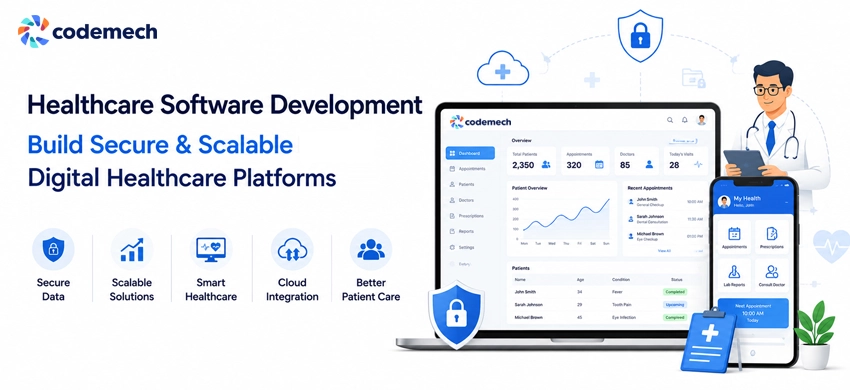
The healthcare industry is experiencing one of the largest digital transformations in its history. Hospitals, clinics, diagnostic centers, healthcare startups, telemedicine providers, pharmaceutical companies, and healthcare enterprises are increasingly investing in technology to improve patient care, streamline operations, reduce costs, and meet regulatory requirements.
Modern healthcare organizations no longer rely solely on traditional systems and manual workflows. Patients expect convenient digital experiences, healthcare professionals need instant access to accurate medical data, and administrators require real-time insights to improve operational efficiency. To meet these growing demands, organizations are adopting secure and scalable digital healthcare platforms.
Building these platforms requires a strategic approach that combines healthcare expertise, technology innovation, compliance management, cybersecurity, and scalable architecture. This is why many organizations partner with a trusted Healthcare Software Development Company to create custom healthcare ecosystems designed for long-term growth.
At Codemech Solutions, we help healthcare organizations develop future-ready healthcare platforms that improve patient experiences, strengthen operational efficiency, and support digital transformation initiatives. In this article, we explore how healthcare software development companies build secure and scalable healthcare solutions and why they have become essential for modern healthcare organizations.
What is Healthcare Software Development?
Healthcare software development refers to the process of designing, developing, implementing, and maintaining digital applications specifically created for healthcare organizations.
These solutions support various healthcare functions, including:
- Patient management systems
- Electronic Health Records (EHR)
- Electronic Medical Records (EMR)
- Telemedicine platforms
- Healthcare mobile applications
- Appointment scheduling systems
- Hospital management software
- Medical billing systems
- Healthcare analytics platforms
- Remote patient monitoring solutions
The primary objective of healthcare software development is to improve healthcare delivery while enhancing efficiency, security, compliance, and patient engagement.
Key Challenges in Healthcare Technology
Before building a healthcare platform, development teams must address several industry-specific challenges.
Managing Sensitive Patient Data
Healthcare organizations handle highly confidential patient information that requires strict protection.
Challenges include:
- Protecting patient records from unauthorized access and cyber threats.
- Ensuring data privacy while allowing healthcare professionals to access information when needed.
Failure to protect healthcare data can result in compliance violations, financial penalties, and reputational damage.
Regulatory Compliance Requirements
Healthcare organizations operate under strict regulations that govern data privacy and security.
Common compliance standards include:
- HIPAA (Health Insurance Portability and Accountability Act)
- GDPR (General Data Protection Regulation)
- HITECH regulations
- Regional healthcare compliance frameworks
Development teams must ensure that healthcare platforms meet all applicable legal and regulatory requirements.
Interoperability and System Integration
Healthcare providers often use multiple software systems.
Challenges include:
- Integrating EHR, EMR, laboratory systems, billing platforms, and patient management tools.
- Maintaining consistent data flow across multiple healthcare environments.
Effective interoperability improves healthcare coordination and patient outcomes.
Security and Compliance Requirements in Healthcare Platforms
Security is one of the most critical aspects of healthcare software development.
Data Encryption
Modern healthcare platforms implement encryption to protect sensitive information.
Benefits include:
- Securing patient data both during transmission and while stored in databases.
- Preventing unauthorized access and reducing cybersecurity risks.
Encryption plays a major role in healthcare compliance and patient trust.
Role-Based Access Control
Healthcare organizations have multiple users with different responsibilities.
Role-based access management allows:
- Physicians to access medical records.
- Administrative staff to manage appointments and billing.
- Patients to access their personal healthcare information.
This approach improves security while maintaining operational efficiency.
Multi-Factor Authentication
Healthcare platforms increasingly utilize multi-factor authentication to strengthen security.
Advantages include:
- Additional protection against unauthorized access attempts.
- Improved compliance with modern cybersecurity standards.
Security-first development helps organizations protect valuable healthcare data.
Electronic Health Records (EHR) Integration
Electronic Health Records have become a core component of modern healthcare systems.
Centralized Patient Information
EHR integration enables healthcare providers to:
- Access patient histories, diagnoses, prescriptions, and treatment plans from a centralized system.
- Improve clinical decision-making through accurate and up-to-date information.
Centralized data improves healthcare quality and operational efficiency.
Enhanced Care Coordination
Healthcare providers often collaborate across departments and facilities.
Integrated EHR systems support:
- Seamless communication among medical professionals.
- Better treatment planning and patient outcomes.
Organizations often seek Healthcare Software Development Services to create healthcare ecosystems that support efficient data sharing and collaboration.
Telemedicine Platform Development
Telemedicine has become an essential part of modern healthcare delivery.
Virtual Consultations
Telemedicine platforms allow healthcare providers to:
- Conduct remote patient consultations.
- Expand healthcare access to rural and underserved populations.
Virtual care improves convenience while reducing barriers to healthcare access.
Remote Patient Monitoring
Modern telemedicine systems support:
- Continuous monitoring of chronic conditions.
- Real-time health tracking and alerts.
These capabilities help improve patient outcomes and reduce hospital readmissions.
Patient Portal Development
Patient engagement is a key priority for healthcare organizations.
Self-Service Healthcare Experiences
Patient portals enable users to:
- Schedule appointments.
- Access medical records.
- View test results.
- Communicate with healthcare providers.
These features improve convenience and patient satisfaction.
Improved Patient Communication
Healthcare organizations can use portals to:
- Send reminders and notifications.
- Share educational content and treatment updates.
Enhanced communication contributes to stronger patient relationships.
Healthcare Mobile Applications
Mobile technology is transforming healthcare accessibility.
On-Demand Healthcare Access
Healthcare mobile applications provide:
- Appointment booking capabilities.
- Medication reminders.
- Telehealth access.
- Health tracking tools.
Mobile solutions empower patients to manage their healthcare more effectively.
Enhanced Engagement
Healthcare apps increase patient engagement by providing:
- Personalized health information.
- Real-time communication channels.
- Continuous care management tools.
These capabilities contribute to improved healthcare experiences.
Cloud-Based Healthcare Platforms
Cloud technology plays a major role in healthcare modernization.
Scalability and Flexibility
Cloud platforms allow healthcare organizations to:
- Expand infrastructure as patient volumes grow.
- Support multiple locations and healthcare facilities.
Scalable architecture supports long-term organizational growth.
Cost Efficiency
Cloud-based healthcare systems help organizations:
- Reduce infrastructure costs.
- Simplify maintenance and software updates.
These benefits improve operational efficiency and technology management.
Many organizations choose Healthcare Software Solutions that leverage cloud technologies to support growth and innovation.
Scalability Considerations in Healthcare Software
Healthcare platforms must support increasing demands over time.
Growing Patient Volumes
Scalable systems can accommodate:
- Larger patient databases.
- Increased appointment scheduling.
- Expanding healthcare services.
Scalability ensures consistent performance as organizations grow.
Multi-Location Support
Healthcare enterprises often operate across multiple facilities.
Scalable platforms help:
- Standardize operations across locations.
- Improve centralized management and reporting.
These capabilities support organizational expansion.
AI and Automation in Healthcare Systems
Artificial Intelligence is rapidly transforming healthcare technology.
Intelligent Diagnostics
AI-powered systems assist healthcare professionals by:
- Analyzing medical data.
- Identifying patterns and anomalies.
- Supporting clinical decision-making.
These tools improve diagnostic accuracy and efficiency.
Workflow Automation
Healthcare automation helps organizations:
- Reduce administrative workloads.
- Streamline scheduling and billing.
- Improve operational efficiency.
Automation allows healthcare professionals to focus more on patient care.
Predictive Analytics
AI can help healthcare providers:
- Forecast patient needs.
- Identify potential health risks.
- Improve resource planning.
Predictive insights contribute to better healthcare outcomes.
Benefits of Custom Healthcare Software
Custom healthcare software provides organizations with solutions tailored to their unique requirements.
Enhanced Security
Custom-built systems incorporate security measures specifically designed for healthcare environments.
Better Integration
Custom platforms integrate seamlessly with existing healthcare infrastructure.
Greater Flexibility
Organizations can adapt software to changing operational and regulatory requirements.
Improved Patient Experiences
Personalized digital experiences improve engagement and satisfaction.
Long-Term Scalability
Custom solutions support future growth without requiring major platform replacements.
A professional Software Development Company can help healthcare organizations maximize these benefits through strategic technology implementation.
Why Choose Codemech Solutions
Healthcare technology projects require specialized expertise, industry knowledge, and a strong understanding of compliance requirements.
At Codemech Solutions, we help healthcare organizations:
- Build secure healthcare platforms.
- Develop telemedicine solutions.
- Integrate EHR and EMR systems.
- Create healthcare mobile applications.
- Implement cloud-based healthcare infrastructure.
- Enhance patient engagement and operational efficiency.
Our team combines healthcare domain expertise with advanced software engineering practices to deliver scalable, compliant, and future-ready healthcare solutions.
Conclusion:
Digital healthcare platforms have become essential for modern healthcare organizations seeking to improve patient care, increase efficiency, maintain compliance, and support long-term growth.
Building secure and scalable healthcare systems requires expertise in cybersecurity, compliance, cloud infrastructure, interoperability, AI technologies, and healthcare workflows. Organizations that invest in custom healthcare software are better positioned to meet evolving patient expectations and future industry demands.
By partnering with an experienced Healthcare Software Development Company like Codemech Solutions, healthcare organizations can accelerate digital transformation and create innovative healthcare ecosystems that deliver measurable business and clinical outcomes.