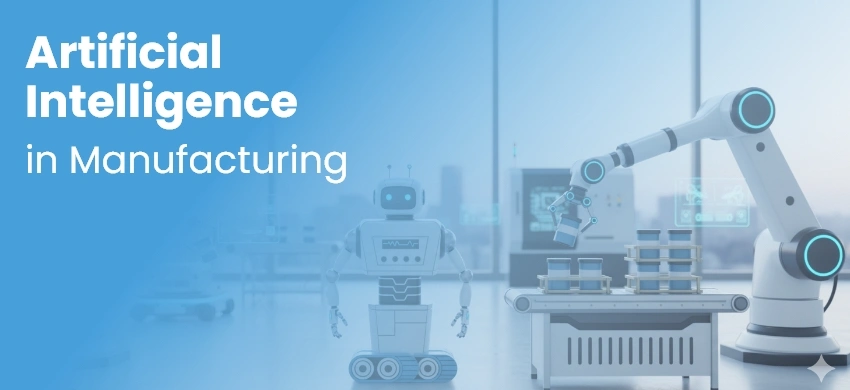
Artificial Intelligence is transforming every industry and manufacturing is one of the biggest beneficiaries of this technological revolution. Modern factories are shifting from traditional manual operations to intelligent systems that can analyze data, detect patterns, learn from behavior and automate complex processes. AI in Manufacturing is no longer optional. It is now a strategic advantage that helps businesses achieve higher productivity, lower costs and greater operational efficiency.
Manufacturers around the world are using artificial intelligence to improve quality control, reduce downtime, manage inventory, optimize production lines and build safer and more intelligent factories. As the industry moves toward smart factories and digital transformation, understanding how AI impacts manufacturing is essential for startups, enterprises and growing industries.
This guide will help you understand everything related to AI in Manufacturing including benefits, use cases, technologies involved, implementation steps and future trends. It also explains how services like Manufacturing Software Development Services and Retail Software Development Services support AI adoption across different manufacturing segments.
What Is AI in Manufacturing
AI in Manufacturing refers to the use of artificial intelligence technologies to automate factory operations, analyze large scale industrial data and improve decision making across manufacturing workflows. These AI solutions rely on machine learning, deep learning, computer vision and IoT to process data generated from machines, sensors and production lines.
AI systems help factories solve problems in real time, detect faults instantly, enhance product quality and optimize production schedules. With AI, factories can reduce waste, increase accuracy and create a safer work environment for employees.
Why AI Matters for Manufacturing in 2026
Manufacturing in 2026 is guided by intelligent systems and real time analytics. Businesses are increasingly adopting artificial intelligence to streamline operations and stay competitive.
1. Increased Productivity
AI models can monitor production processes and ensure maximum machine utilization. This leads to faster production cycles and higher output.
2. Reduced Operational Costs
AI minimizes unplanned downtime and prevents equipment breakdowns through predictive maintenance. This helps companies save major repair costs.
3. Enhanced Quality
Computer vision powered AI systems detect defects accurately and reduce the chances of faulty product batches.
4. Better Decision Making
AI based insights offer real time recommendations for improving factory performance, inventory planning and production management.
5. Improved Safety
AI systems identify safety hazards and notify workers or supervisors instantly.
Core Technologies Driving AI in Manufacturing
To understand how AI works in manufacturing, it is important to know the technologies behind it.
Machine Learning
It helps identify patterns in manufacturing data and predict machine failures, quality issues and demand fluctuations.
Deep Learning
Deep learning enhances image processing, equipment monitoring and advanced decision making.
Computer Vision
Computer vision algorithms inspect products, detect defects and monitor equipment in real time.
Internet of Things IoT
IoT devices collect data from machines, production lines and factory environments to feed AI systems.
Cloud and Edge Computing
Cloud platforms store and process large scale manufacturing data. Edge computing enables real time decisions right on the factory floor.
Key Applications of AI in Manufacturing
AI impacts almost every area of manufacturing. Below are the most important applications.
Predictive Maintenance
AI analyzes machine data to predict equipment failures before they happen. This reduces downtime and extends machine life.
AI Based Quality Control
AI systems inspect products using computer vision and ensure that each item meets quality standards. This reduces errors and prevents defective products from reaching customers.
Production Optimization
AI optimizes production schedules, monitors resource utilization and helps reduce waste across production lines.
Inventory Management
AI ensures that factories maintain the right inventory levels by predicting supply and demand accurately.
Robotics and Automation
AI powered robots and cobots assist workers with repetitive or hazardous tasks, improving efficiency and safety.
Supply Chain and Logistics
AI improves forecasting, route planning, supplier management and warehouse automation.
Energy Optimization
AI monitors energy usage and reduces unnecessary consumption in industrial operations.
Smart Factory Monitoring
AI creates a connected factory environment where machinery, sensors and systems communicate with each other for automated decision making.
AI Use Cases Across Manufacturing Industries
AI benefits different manufacturing industries in unique ways.
Automotive Manufacturing
AI enhances assembly line automation, real time quality inspection and inventory forecasting.
Electronics Manufacturing
AI supports defect detection in micro components and precision assembly tasks.
Pharmaceutical Manufacturing
AI improves compliance, quality testing and production accuracy.
Food and Beverage Manufacturing
AI optimizes packaging, labeling and temperature monitoring.
Textile Manufacturing
AI improves pattern inspection and fabric quality.
Aerospace and Defense
AI ensures precision engineering, safety and predictive maintenance of heavy machinery.
Heavy Machinery and Metal Industries
AI monitors equipment health and reduces operational risks.
Retail Manufacturing
AI enhances product forecasting, inventory optimization and supply chain agility. Businesses often use Retail Software Development Services to build AI powered retail manufacturing systems.
Manufacturing is just one area where AI is reshaping industries — see how companies in other sectors are leveraging intelligence in our guide on AI in Business: How Companies Are Leveraging Intelligence in 2026.
How AI Improves Major Manufacturing Processes
Assembly Line Automation
AI speeds up assembly lines through robotic assistance and automated process monitoring.
Procurement Optimization
AI evaluates vendor performance, pricing trends and material availability to streamline procurement workflows.
Defect Detection
AI identifies flaws that are invisible to the human eye using advanced computer vision models.
Quality Management
AI ensures consistent product quality and reduces production cycle defects.
Safety Monitoring
AI powered sensors detect hazardous activities and alert workers immediately.
Integrating AI with IoT and Robotics
AI becomes even more powerful when combined with IoT and robotics. This combination allows factories to automate tasks, collect continuous data and operate with greater intelligence.
IoT sensors gather machine readings in real time
Robotics enhances productivity and reduces physical strain
AI analyzes sensor data to make instant decisions
This combination creates a fully automated and intelligent manufacturing environment
Benefits of AI for Startups and Enterprises
Scalability
AI systems support future production growth without major changes.
Faster Output
AI optimizes workflows to deliver results quicker.
Better Customer Satisfaction
Improved quality and reduced errors lead to better customer experience.
Higher Return on Investment
AI powered optimization delivers long term savings and increased profit margins.
Many companies also adopt Manufacturing Software Development Services to integrate AI solutions seamlessly into their factory systems.
Step by Step Guide to Implementing AI in Manufacturing
Step 1 Identify Your Manufacturing Challenges
Understand whether your business needs help with quality control, inventory management, downtime reduction or forecasting.
Step 2 Collect and Organize Manufacturing Data
AI requires high quality data from machines, sensors and systems.
Step 3 Choose the Right AI Tools and Technologies
Select suitable AI models, IoT platforms and computer vision tools for your requirements.
Step 4 Build and Train AI Models
Develop machine learning models using industry data to predict or automate specific functions.
Step 5 Conduct Pilot Testing
Test AI on a small production line before expanding.
Step 6 Integrate AI with Existing Factory Systems
Ensure seamless connection between AI tools, machines and business processes.
Step 7 Scale AI Across the Factory
Expand AI adoption once the pilot shows positive results.
Challenges in AI Adoption for Manufacturers
AI adoption can bring some challenges such as:
Lack of high quality data
Difficulty integrating AI with old manufacturing systems
Shortage of skilled AI professionals
High initial investment in some cases
Cybersecurity concerns
A professional technology partner can help overcome these challenges effectively.
Future of AI in Manufacturing Beyond 2026
The future of manufacturing will rely heavily on AI powered innovations such as:
Autonomous factories
Digital twins for real time simulation
AI enabled industrial robots
Self healing machines
Smart quality assurance systems
Hyper automated production workflows
AI will support end to end automation that improves efficiency and reduces human effort.
How to Choose the Right AI Partner for Manufacturing
Choosing the right development partner is essential for successful AI implementation.
Look for a company that has:
Expertise in manufacturing technologies
Strong portfolio in industrial AI
Ability to integrate IoT systems
Experience in large scale AI implementation
Long term support and maintenance
Many manufacturers choose partners who provide Manufacturing Software Development Services to build long lasting and scalable AI systems.
Conclusion
Artificial Intelligence is transforming how factories operate, improving productivity, accuracy and decision making at every level. With AI, manufacturers reduce downtime, optimize processes and increase output significantly. As the world moves toward intelligent digital factories, AI will play an even bigger role in driving innovation and growth. This is the best time for startups and enterprises to invest in AI powered manufacturing solutions and strengthen their competitive advantage.
Codemech Solutions helps manufacturing businesses adopt AI with confidence. We build intelligent factory solutions using AI, IoT, robotics and advanced analytics. Whether you need AI powered quality inspection, predictive maintenance systems or fully customized manufacturing applications, our team is ready to support your transformation with reliable expertise.