Introduction
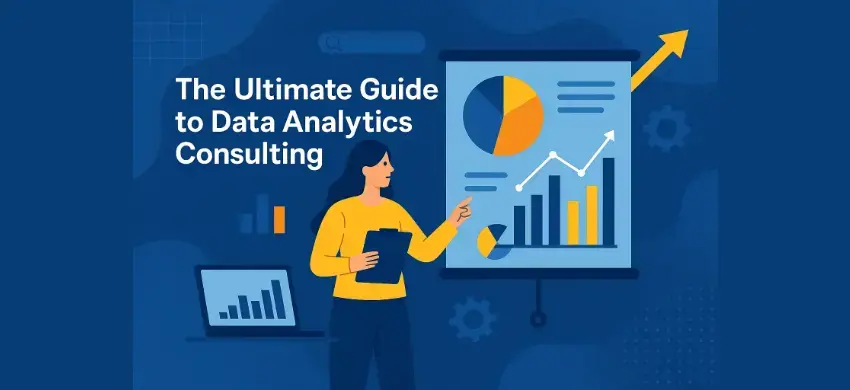
In the era of digital transformation, businesses generate massive amounts of data every day. From customer interactions and sales metrics to operational performance and market trends, this data holds the potential to unlock insights that can drive growth, efficiency, and profitability. However, extracting meaningful insights from raw data requires expertise, advanced analytics tools, and a strategic approach.
Data analytics consulting is the solution that empowers businesses to harness the full potential of their data. By partnering with a professional consulting firm, organizations can transform raw information into actionable insights, optimize operations, enhance decision-making, and maintain a competitive edge.
What is Data Analytics Consulting
Data analytics consulting involves providing expert guidance to organizations on how to collect, analyze, interpret, and act on their data. Unlike traditional reporting, consulting services include strategic planning, implementation of advanced analytics solutions, and ongoing support to ensure businesses derive maximum value from their data.
Consulting firms help organizations:
Identify business goals and align them with data strategy
Implement data collection and integration systems
Use advanced analytics techniques to generate insights
Provide actionable recommendations to improve business performance
Through data analytics consulting, companies can optimize processes, reduce costs, and uncover opportunities that would otherwise remain hidden.
Core Types of Analytics Services
Data analytics consulting encompasses several types of analytics to meet various business needs:
Descriptive Analytics
Analyzes historical data to understand what has happened and identify trends and patterns.
Diagnostic Analytics
Focuses on why something happened, providing insights into the causes of business outcomes.
Predictive Analytics
Uses statistical models and machine learning algorithms to forecast future trends and outcomes.
Prescriptive Analytics
Offers recommendations on what actions should be taken based on predictive insights.
Real-Time Analytics
Provides immediate insights from data as it is generated, enabling rapid decision-making.
AI-Powered Analytics
Incorporates artificial intelligence to automate analysis, detect patterns, and generate predictive recommendations efficiently.
Step-by-Step Data Analytics Consulting Process
A structured process ensures that businesses get the most value from data analytics consulting:
1. Data Collection and Integration Identify relevant data sources and integrate them into a centralized system. This may include CRM data, ERP systems, web analytics, and third-party data sources.
2. Data Cleaning and Preprocessing Ensure data accuracy and consistency by removing duplicates, correcting errors, and standardizing formats.
3. Analysis and Modeling Apply statistical techniques, machine learning models, and advanced analytics to identify patterns, correlations, and actionable insights.
4. Visualization and Reporting Transform complex data into clear visual representations such as dashboards, charts, and interactive reports for easy interpretation.
5. Actionable Recommendations Provide strategic guidance based on analytical findings to help businesses optimize operations, enhance customer experience, and drive growth.
6. Continuous Monitoring and Optimization Regularly monitor analytics outcomes and refine models to ensure relevance and accuracy over time.
Tools and Technologies in Data Analytics Consulting
Successful data analytics consulting relies on the right combination of tools and technologies:
BI Tools: Power BI, Tableau, Looker for visual dashboards and reporting
Programming Languages: Python and R for statistical modeling and machine learning
Databases: SQL, NoSQL, and cloud-based storage for structured and unstructured data
Cloud Platforms: AWS, Azure, Google Cloud for scalable analytics infrastructure
AI and Machine Learning: Predictive and prescriptive analytics, anomaly detection, and automation
Choosing the right tools depends on the organization’s size, data complexity, and long-term analytics goals.
Industry-Specific Applications of Data Analytics Consulting
Data analytics consulting provides value across industries:
Healthcare
Improves patient care, predicts disease trends, and optimizes hospital operations.
Finance and Banking
Supports fraud detection, risk assessment, and customer segmentation.
Retail and E-commerce
Enhances inventory management, predicts sales trends, and personalizes marketing campaigns.
Manufacturing
Optimizes supply chain management, predictive maintenance, and production efficiency.
Logistics and Supply Chain
Provides route optimization, shipment tracking, and demand forecasting.
Benefits of Data Analytics Consulting for Businesses
Investing in data analytics consulting yields multiple benefits:
Informed Decision-Making
Analytics empowers leaders to make evidence-based decisions.
Operational Efficiency
Identify and eliminate bottlenecks, optimize processes, and allocate resources effectively.
Revenue Growth
Insights into customer behavior and market trends open opportunities for increased sales and profitability.
Enhanced Customer Experience
Personalized solutions and services based on data increase customer satisfaction and loyalty.
Predictive Insights
Forecast future trends and plan proactively for changing market conditions.
Competitive Advantage
Gain insights that competitors may not have, allowing strategic differentiation.
Common Challenges in Data Analytics Implementation
While the benefits are clear, businesses face challenges when adopting analytics:
Data Quality Issues: Incomplete or inconsistent data can affect insights.
Integration Challenges: Combining multiple data sources requires planning and expertise.
Skill Gaps: Businesses may lack in-house analytics and AI expertise.
Change Management: Teams need proper training to adopt analytics workflows.
Managing Large Datasets: Ensuring performance and scalability requires advanced infrastructure.
Partnering with an expert like Codemech Solutions ensures these challenges are addressed effectively.
Best Practices for Choosing a Data Analytics Consulting Partner
To maximize ROI from data analytics consulting, businesses should consider:
Experience and Expertise: Proven track record and industry knowledge
Technology Stack: Ability to use modern analytics, AI, and cloud tools
Methodology: Structured, repeatable approach to data integration and analysis
Customization and Scalability: Solutions tailored to business size and goals
Post-Implementation Support: Continuous optimization, monitoring, and training
Codemech Solutions offers all of these capabilities to deliver measurable business outcomes.
Codemech Solutions Approach to Data Analytics Consulting
At Codemech Solutions, our approach to data analytics consulting focuses on delivering strategic value:
Customized Solutions: Tailored analytics frameworks to meet specific business objectives
Advanced Analytics: Incorporating AI, predictive modeling, and machine learning
Cloud Integration: Scalable solutions using AWS, Azure, and Google Cloud
Visualization and Insights: Clear, actionable dashboards for executives and teams
Continuous Support: Ongoing monitoring, optimization, and consulting
We help businesses convert raw data into actionable strategies, ensuring informed decisions and measurable growth.
Future Trends in Data Analytics Consulting
The future of data analytics consulting will be shaped by technological innovations:
AI-Driven Analytics: Automating data analysis and generating predictive recommendations
Real-Time Decision Making: Insights delivered instantly for quick action
Cloud-Based Analytics: Scalable, secure, and cost-effective solutions
IoT and Big Data Integration: Leveraging diverse data sources for deeper insights
Self-Service Analytics: Empowering teams to access and analyze data independently
Organizations adopting these trends will maintain a competitive edge and drive innovation.
Conclusion
Data analytics consulting is essential for businesses looking to harness the power of their data for growth, efficiency, and strategic advantage. From operational optimization to predictive insights, analytics provides actionable intelligence that drives better decision-making.
At Codemech Solutions, our Data Analytics Services empower organizations to implement robust, AI-driven, and scalable analytics frameworks. By partnering with Codemech Solutions, businesses can unlock the full potential of their data, achieve measurable results, and maintain a competitive advantage in a rapidly evolving marketplace.
Many consulting projects rely on powerful tools — discover how organizations use Pentaho for business data analytics to unlock insights.