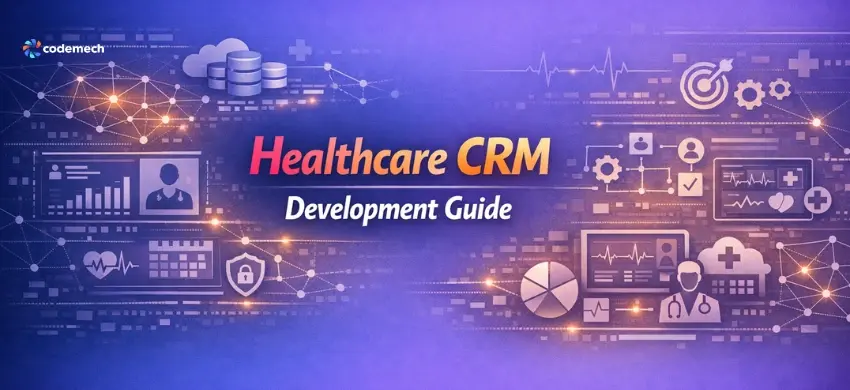
Healthcare CRM Development Guide
In the fast-evolving world of digital health, Healthcare CRM (Customer Relationship Management) systems have become more than just a tool hey’re the heartbeat of patient engagement and personalized care. As we move further into 2026 building a modern, intuitive CRM tailored for healthcare is no longer optional t's essential.
Whether you're a healthcare provider, IT consultant, or digital health startup, this guide will walk you through the essentials of healthcare CRM development in 2026 from what it is to how to build one that meets today’s expectations.
Healthcare CRM is part of digital transformation — see Artificial Intelligence: Everything You Should Know in 2026.
What is CRM in Healthcare?
A healthcare CRM is a specialized software platform designed to help healthcare providers manage relationships with patients, streamline communications, improve care coordination, and enhance overall patient experiences.
It goes beyond traditional record-keeping. A modern CRM integrates with EHRs, telehealth tools, and wearable data to create a 360-degree view of each patient, enabling personalized engagement and proactive care.
Why Healthcare Organizations Need CRM Solutions
The healthcare landscape has shifted dramatically. Patients now expect convenience, transparency, and personalized communication ust like they do in retail or banking.
Here’s why CRM is vital for healthcare in 2026
Rising Patient Expectations: People want digital-first interactions ppointment reminders, test results, and follow-ups through email or SMS.
Need for Personalization: From preventive care to chronic disease management, CRMs help tailor communication and services to each individual.
Operational Efficiency: Automate repetitive tasks like scheduling and follow-ups, allowing staff to focus more on patient care.
Data-Driven Decisions: CRMs turn raw patient interaction data into actionable insights, supporting better decision-making.
Use of CRM Software in the Healthcare Industry
Healthcare CRMs are being used across various domains:
Patient Relationship Management: From acquisition to retention, CRMs guide the entire journey.
Marketing Automation: Launch targeted health campaigns based on age, conditions, or location.
Referral Management: Track referrals between specialists and facilities.
Feedback & Satisfaction Tracking: Collect patient feedback to improve care quality.
Care Coordination: Improve collaboration across teams and departments.
Types of Healthcare CRM
1. Operational CRMs
These focus on automating workflows such as patient intake, appointment scheduling, and communication management.
2. Analytical CRMs
These CRMs analyze data to provide insights into patient behavior, engagement patterns, and outcomes. Ideal for organizations focusing on value-based care.
Some CRMs may also be hybrid, combining operational and analytical functions into a single platform.
Benefits of CRM in Healthcare
The advantages of implementing a healthcare CRM system are substantial:
- Improved Patient Engagement
- Higher Patient Retention Rates
- Streamlined Communication
- Faster Access to Information
- Enhanced Care Quality
- Better Coordination Between Departments
- Increased Revenue Through Better Marketing & Scheduling
By offering personalized and timely interactions, healthcare providers can build trust and loyalty while optimizing internal operations.
Features of Healthcare CRM Systems
A modern healthcare CRM should include:
360-Degree Patient Profiles Centralized view of medical history, appointments, communications, and preferences.
Multichannel Communication Tools SMS, email, phone, chatbot, and mobile app support.
AI & Predictive Analytics Forecast no-shows, flag high-risk patients, and suggest interventions.
Appointment & Follow-Up Automation Send reminders, reschedule no-shows, and close the loop on missed visits.
Patient Segmentation Group patients by conditions, demographics, or behavior for targeted care plans.
How to Build a Healthcare CRM System
1. Define Objectives
What problems are you solving? Better communication? Faster scheduling? Personalized care?
2. Gather Requirements
Talk to stakeholders doctors, admins, marketers to understand the workflows.
3. Choose the Right Tech Stack
Modern CRMs are built on:
Frontend: React, Angular, Vue.js
Backend: Node.js, Python, Ruby
Database: MongoDB, PostgreSQL
Cloud: AWS, Google Cloud, Azure
AI/ML: TensorFlow, OpenAI, Azure AI
4. Design UX/UI
Ensure mobile-first design, intuitive navigation, and ADA compliance.
5. Develop Core Modules
Focus on core features like patient profiles, messaging, and analytics first.
6. Integrate Systems
Integrating APIs with EHRs, telehealth services, billing platforms, and wearable devices is essential.
7. Test & Secure
HIPAA and GDPR compliance are mandatory. Add role-based access control, encryption, and audit trails.
8. Deploy & Monitor
Roll out in phases, collect user feedback, and iterate continuously.
Why Do You Need CRM for Healthcare?
If you’re wondering whether your organization really needs a CRM, consider this:
- Are patients missing appointments?
- Do you struggle with follow-ups or outreach?
- Is your team buried in repetitive admin tasks?
- Do you lack visibility into patient engagement data?
If any of these challenges resonate with you, implementing a CRM could significantly improve your practice.
Trends for Healthcare Software Development in 2026
2026has brought a wave of innovation into healthcare software, including CRM systems:
AI-Driven Personalization: Patient journeys are dynamically adjusted based on behavior.
Voice-Enabled Interfaces: Doctors and nurses interact hands-free with CRM tools.
Digital Twin Technology: Simulations of patient outcomes based on CRM data.
Blockchain for Consent & Access Control: Transparent and secure data access.
Purpose of a Healthcare CRM
To create a centralized, intelligent, and patient-centric system that enhances communication, improves care quality, and builds lasting patient relationships.
Whether it's helping a nurse remember a patient’s preferred appointment time or reminding a diabetic patient to refill a prescription, a CRM is the behind-the-scenes engine driving better care.
Conclusion
The healthcare industry in 2026 emands agility, personalization, and innovation. A well-designed CRM enables providers to rise to this challenge urning fragmented systems into seamless, patient-centered experiences.
Whether you build from scratch or tailor an existing solution, investing in a healthcare CRM isn't just about keeping up with technology t's about improving lives, one interaction at a time.